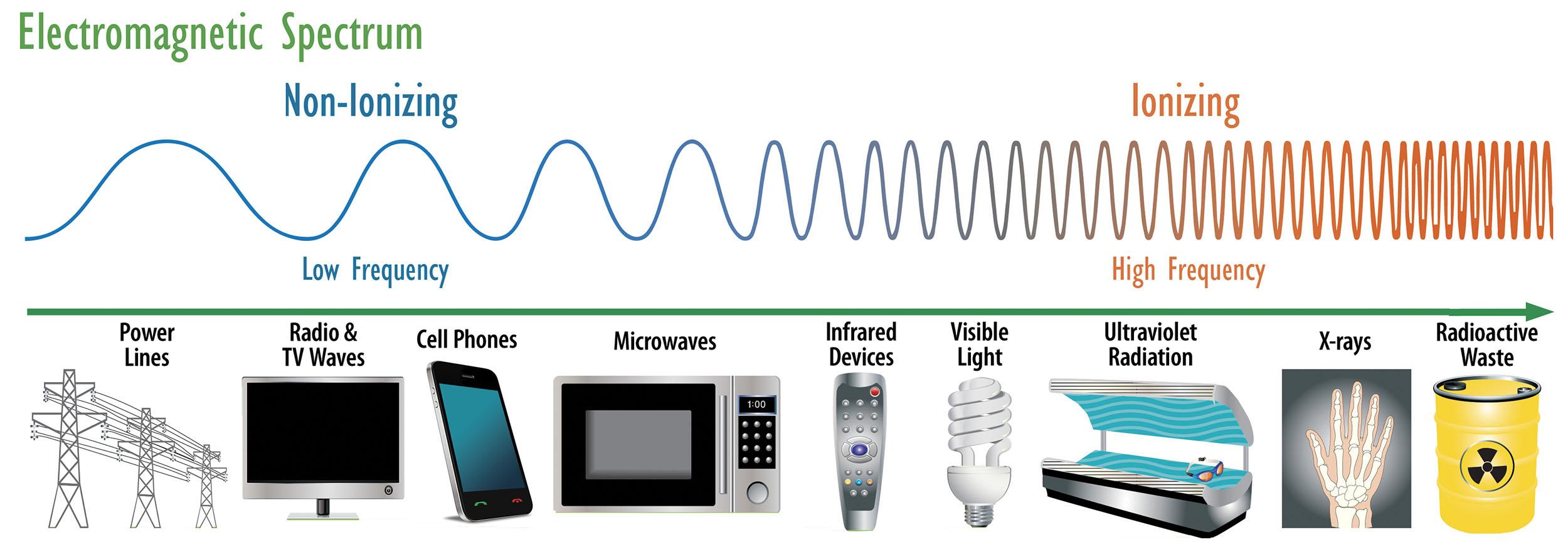
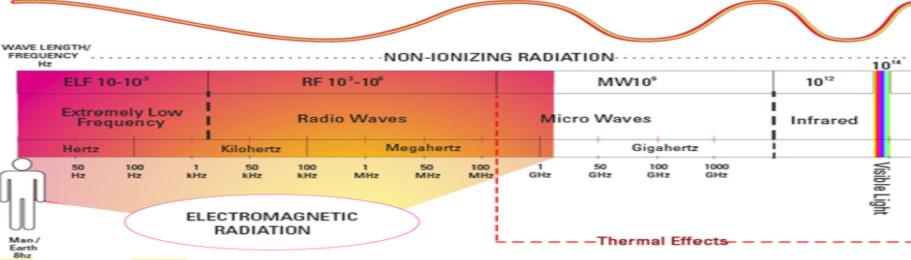
The electromagnetic spectrum is the complete range of all the different types of light and energy that move through space as waves. It stretches from very long, low-energy waves—like radio waves that carry signals to your car stereo and microwaves that heat your food—all the way to extremely short, high-energy waves like X-rays that see through skin and gamma rays produced by outer space phenomena. Somewhere right in the middle of this vast spectrum is a tiny slice called visible light, which contains all the colors human eyes can actually see, from red to violet.
Electromagnetic Spectrum Basics
At the high end of the electromagnetic spectrum are high frequency ionizing forms of radiation.
Ionizing radiation such as UV rays and radioactive waste can cause cancer if a person is exposed to a lot of it. This is because it can DIRECTLY damage our DNA, which can lead to cancer.
At the low end of the electromagnetic spectrum are low frequency non-ionizing forms of radiation.
Non-ionizing radiation like those from power lines do not directly cause cancer but INDIRECTLY influences carcinogenesis through biological pathways.
Electromagnetic Spectrum
Non-Ionizing Radiation
The waves from power lines and electrical devices have a much lower frequency than other types of EMR (electromagnetic radiation), such as microwaves, radio waves or gamma rays.
A low frequency wave does not necessarily mean that it is low energy; a charging cable for a phone produces a low frequency, low energy electromagnetic field, while a high-tension power line can create a much higher energy electromagnetic field that is still low in frequency.
Non-Ionizing Radiation
Effects Of Non-Ionizing Radiation On The Human Body
Exposure limits for non-ionizing radiation are complicated and there is no single value based on frequency and exposure time to refer to, as is the case for lasers. The exposure limits are based on a threshold level at which harmful biological effects may occur.
Different parts of the body have different exposure limits, which are given for the head and torso, and limbs.
Long term effects to exposure to non-ionizing radiation are not well known.
You are exposed to low levels of non-ionizing radiation every day, but intense exposure may result in damage to tissue, cell structure and DNA.
Why Electromagnetic Radiation Affects Kids More than Adults
Children have smaller/thinner skulls - Children's brains show 62%-125% higher absorption rates of EMF radiation as opposed to adults.
Children's brains and nervous systems remain in active development through childhood.
Children are more sensitive to EMFs during critical periods of development.